
On 20th March 2026, the Republic of Tunisia proudly commemorates the 70th anniversary of its
independence, marking seven decades of sovereignty, progress and resilience since gaining independence
from France in 1956 after seventy-five years as a French protectorate (1881–1956). This historic milestone
provides an opportunity not only to celebrate Tunisia’s national achievements but also to reflect on its
growing global partnerships and its expanding engagement with countries such as Pakistan.
Located in North Africa, Tunisia occupies a strategically significant position between Algeria and Libya,
along the southern Mediterranean coast. With a population of approximately 12 million people, the
country has long served as a natural gateway between Africa and Europe, a geographic advantage that has
shaped its history, culture and economic outlook. This strategic location continues to position Tunisia as
an important hub for trade, tourism and cultural exchange between continents.
Tunisia’s journey since independence has been marked by strong institutional development and a forwardlooking approach to governance and economic modernization. Following independence, Tunisia adopted
its first constitution in 1959, establishing a legal framework that incorporates elements of Islamic law
alongside modern legal codes, reflecting both the country’s Islamic identity and its commitment to
progressive institutional development.
Arabic is the sole official language of Tunisia, and the country is a proud Muslim-majority nation with deep historical and cultural roots in the Arab and Islamic world. Tunisia is also an active member of the Organisation of Islamic Cooperation (OIC), having joined the organization in 1969, reaffirming its commitment to cooperation among Muslim-majority nations across political, economic and cultural spheres.
At the same time, Tunisia maintains strong international partnerships beyond its immediate region. One of its most significant relationships is with the European Union, with which Tunisia enjoys a long-standing, strategic and comprehensive partnership. Due to its geographic proximity to Europe and its economic orientation, Tunisia has developed robust cooperation with European markets in trade, industry, education and tourism. This dual connectivity; strong ties to both Africa and Europe, makes Tunisia uniquely positioned as a bridge between continents.
Economically, Tunisia continues to demonstrate resilience and progress. The country’s GDP stands at approximately USD 59 billion, supported by diversified sectors including agriculture, manufacturing, services and tourism. Among Tunisia’s most celebrated economic strengths is its globally recognized olive oil industry. Tunisia is widely regarded as one of the world’s leading producers and exporters of high-quality olive oil, often praised for producing some of the best olive oil in the world. Its favorable Mediterranean climate and centuries-old agricultural traditions have allowed the country to establish itself as a major global supplier.
Tourism also remains a cornerstone of Tunisia’s economy. Known for its Mediterranean beaches, historic cities, Roman ruins, desert landscapes and UNESCO heritage sites, Tunisia attracts visitors from across Europe, the Middle East and beyond. The country offers a unique combination of cultural heritage, natural beauty and modern hospitality infrastructure, making tourism one of its most dynamic sectors.
Beyond economic indicators, Tunisia has also demonstrated strong commitment to global development goals. According to a report published by the Center for Sustainable Development Goals for Africa, Tunisia ranked first among 52 African countries in achieving the Sustainable Development Goals (SDGs), with an impressive progress rate of 67.1 percent. This ranking reflects Tunisia’s efforts in advancing education, healthcare, environmental sustainability and social development.
For Pakistan, Tunisia represents both a trusted partner and a promising economic opportunity. The relationship between the two countries is built on shared values, mutual respect and common membership in international organizations such as the OIC. However, the potential for deeper economic cooperation remains vast and largely untapped. I must acknowledge Pakistan’s Embassy team in Tunis, Ministry of Foreign Affairs Islamabad team their role in this regard is commendable.
Tunisia’s strategic position as a gateway to both Africa and Europe creates significant opportunities for Pakistani exporters and investors. Pakistani industries, particularly in textiles, pharmaceuticals, surgical instruments, food products, and agricultural technology can explore Tunisia as a potential entry point into North African and European markets. Likewise, Tunisian expertise in olive oil production, tourism management and Mediterranean agriculture offers valuable opportunities for collaboration and knowledge exchange.
Strengthening such partnerships requires active diplomatic engagement at multiple levels. In this regard, the Embassy of the Republic of Tunisia in Islamabad plays a vital role in fostering bilateral relations between the two countries. Complementing the Tunis Embassy’s work is the dedicated network of Honorary Consuls of Tunisia in Karachi, Lahore and Peshawar, who serve as key facilitators of diplomatic, economic and cultural interaction at the provincial level. Enhancing Pakistan – Tunisia bilateral relations, Tunis Chargee de Affairs in Islamabad efforts are certainly appreciated.
Through trade promotion, cultural initiatives, tourism promotion and business networking, these diplomatic representatives continue to build bridges between the people and institutions of Pakistan and Tunisia. Their efforts help translate diplomatic goodwill into practical collaboration across sectors such as commerce, education and cultural exchange.
As Tunisia celebrates its 70th Independence Day, it stands as a nation that has successfully navigated historical challenges while embracing modernization and international cooperation. Its commitment to sustainable development, its strategic partnerships with global institutions, and its openness to economic collaboration reflect a country looking confidently toward the future.
For Pakistan, this anniversary is also a reminder of the importance of strengthening ties with nations that share both regional significance and global connectivity. Tunisia’s role as a bridge between Africa, Europe and the Arab world makes it a valuable partner in expanding Pakistan’s diplomatic and economic horizons.
The celebration of Tunisia’s independence is therefore not only a national milestone for the Tunisian people but also an occasion to reaffirm the growing friendship between Pakistan and Tunisia; a partnership built on mutual respect, shared opportunities, and a vision for stronger cooperation in the decades ahead.
Tunisian Olive Oil:
Ancient Roots, Organic Purity and Global Excellence
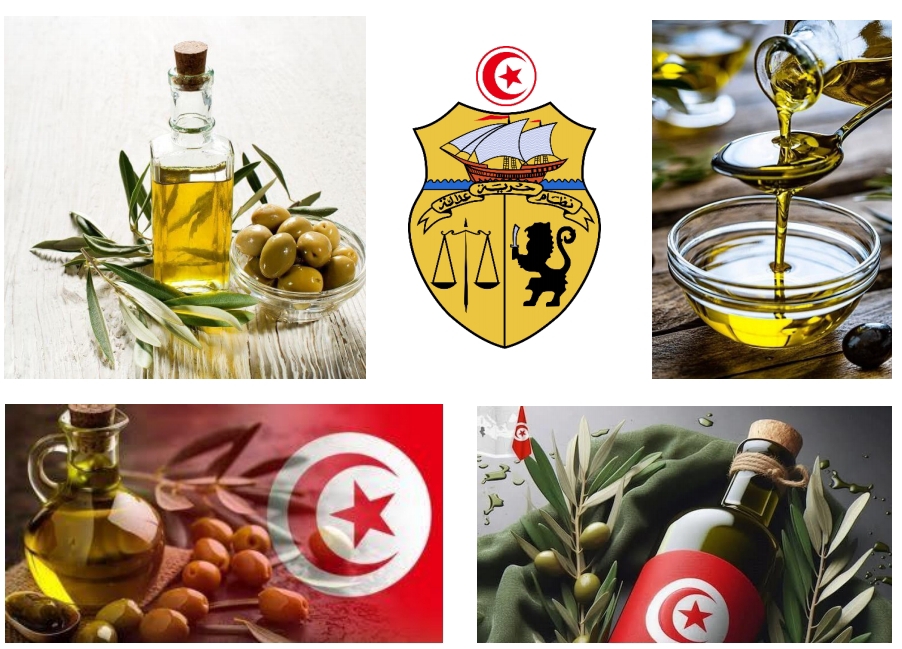
Olive oil has long been regarded as one of the world’s most valuable and health-enhancing natural
products, forming the cornerstone of diets, cultures and economies across continents. Celebrated for its
exceptional nutritional benefits; Rich in antioxidants, heart-healthy fats, and anti-inflammatory properties,
it is widely recognized as a key contributor to longevity and overall well-being, particularly within the
Mediterranean lifestyle. Beyond its health advantages, olive oil holds immense global economic and
culinary significance, serving as a premium ingredient in kitchens and industries worldwide. In this thriving
global landscape, Tunisia has emerged as a leading and influential producer, consistently supplying highquality olive oil to international markets. With its deep-rooted heritage, expansive olive groves and
commitment to organic purity, Tunisia plays a pivotal role in meeting global demand, positioning itself as
a trusted and respected source of some of the finest olive oil available today.
One of the defining characteristics of Tunisian olive oil is its remarkable authenticity and organic nature.
Unlike many large-scale producers around the world, Tunisia relies heavily on traditional farming methods,
often with minimal chemical intervention. The best olive oil, such as that produced by the extremely well
regarded Les Moulins Mahjoub, is made using truly ancient methods, such as stone grinding wheels and
non-industrial presses.
A significant proportion of Tunisia’s olive groves are naturally organic, benefiting from the country’s
favourable climate, long sunny days, fertile soils and limited rainfall which creates ideal conditions for olive
cultivation. This natural environment allows Tunisian olive oil to retain its rich nutritional profile.
The diversity of olive varieties grown in Tunisia further contributes to the uniqueness of its olive oil.
Indigenous cultivars such as Chemlali and Chetoui produce oils with distinct flavour profiles, ranging from
mild and smooth to robust and peppery. This versatility enables Tunisian olive oil to cater to a wide array
of culinary preferences, whether used in traditional Mediterranean dishes or modern international
cuisine. Its balanced taste, combined with exceptional quality, has positioned Tunisia as one of the world’s
leading exporters of olive oil.
In recent years, Tunisian olive oil has gained significant global recognition, consistently earning prestigious
international awards that affirm its excellence. According to detailed international data from 2021 to 2026,
Tunisia has achieved remarkable success in the world’s most competitive olive oil competitions. At the
renowned NYIOOC World Olive Oil Competition; considered the most prestigious contest globally, Tunisian
producers have secured over 115 awards in just five years. This includes an impressive tally of gold and
silver medals, highlighting both quality and consistency across different harvest seasons.
The year 2022 marked a record-breaking milestone, with Tunisia winning 32 awards, including 21 gold and
11 silver medals, reflecting a peak in performance and global recognition. In 2023, despite facing
challenging drought conditions, Tunisian olive oil demonstrated remarkable resilience by securing 27
awards, including 13 gold and 14 silver medals; An achievement that underscores the industry’s strength
even in adverse circumstances. The momentum continued in 2024, where Tunisia achieved 26 awards with
an outstanding 72% success rate for its entries, further solidifying its reputation for consistent excellence.
Equally noteworthy is Tunisia’s performance in the Mario Solinas Quality Award, organized by theInternational Olive Council, which is widely regarded as the most stringent and prestigious quality
benchmark in the olive oil industry. Tunisia has maintained a consistent presence among the top three
globally, including a gold medal achievement in 2021 and a remarkable second-place global ranking in
This recognition places Tunisia alongside traditional olive oil giants such as Spain and Italy, affirming
its position as a leading producer on the world stage.
In addition to these accolades, Tunisia demonstrated regional dominance in 2025 at the Scandinavian
International Olive Oil Competition, where it secured an extraordinary 64 medals, including 45 gold
awards, and ranked first overall. This achievement not only highlights the superior quality of Tunisian olive
oil but also reflects its growing appeal in diverse international markets. Early results from 2026 further
indicate continued success, with Tunisian brands earning multiple gold and silver awards, ensuring that
this upward trajectory remains strong.
Beyond awards and recognition, Tunisian olive oil stands out for its commitment to sustainability and
environmental stewardship. Olive trees in Tunisia are often cultivated in traditional, low-density groves
that preserve biodiversity and prevent soil degradation. This eco-friendly approach aligns with global
trends toward sustainable agriculture, making Tunisian olive oil an attractive choice for environmentally
conscious consumers.
The olive oil sector plays a vital role in Tunisia’s economy, supporting thousands of farmers and
contributing significantly to exports. It is a symbol of resilience, innovation, and national pride,
representing Tunisia’s ability to combine ancient traditions with modern standards of excellence.
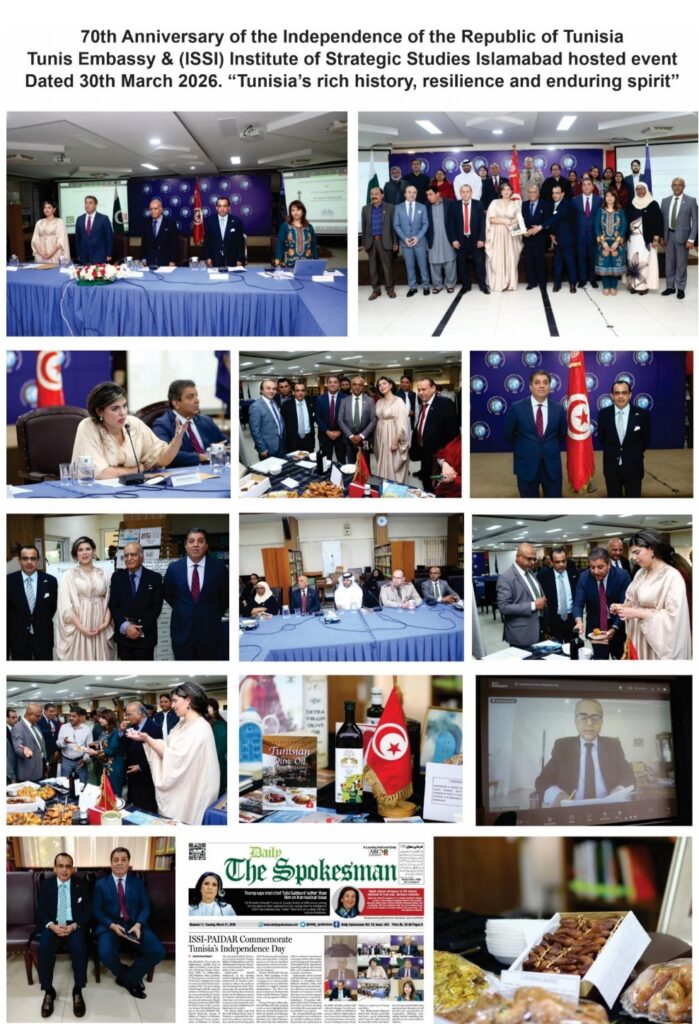
Speech by, H.E Dorsaf Maaroufi Chargee de Affairs.
Embassy of the Republic of Tunisia, Islamabad
70th Anniversary of Tunisia’s Independence.
Venue: Institute of Strategic Studies Islamabad (ISSI).
Date: March 30, 2026
Ambassador Khalid Mahmood, Chairman of the BOG ISSI,
Dr. Amina Khan, Director CAMEA-ISSI,
Ambassador Hamid Asghar Khan, Additional Foreign Secretary (Africa),
Ambassador Javed Ahmed Umrani,
Senator Mushahid Hussain Sayed,
Excellencies, Distinguished Members of the Tunisian Community,
Ladies and Gentlemen,
All protocols observed,
It is a profound Honor to stand before you today as we celebrate the 70th Anniversary of Tunisia’s
Independence.
This is the second time we gather at the ISSI for this occasion, but it marks a significant “first”: the
inaugural celebration of Tunisia’s National Day within the ISSI’s official annual agenda. While this is our
second consecutive year in this hall, I wish to emphasize that our presence here is not a matter of
routine. Rather, it is a deliberate and powerful reaffirmation of our shared commitment to advancing our
bilateral agenda.
A Legacy of Solidarity: The Bukhari Connection
Our gathering today is deeply symbolic. As we reflect on our journey toward sovereignty, we remember
with gratitude those who stood by us when our voice was yet to be heard on the global stage.
The bond between Tunisia and Pakistan is etched in history. We recall the pivotal role played by Pakistan
at the United Nations, championing the Tunisian cause for self-determination. In particular, the name of
Ahmed Shah Patras Bukhari, Pakistan’s Permanent Representative to the UN, holds a sacred place in the
hearts of all Tunisians.
His diplomatic mastery in internationalizing our struggle turned a colonial grievance into a global mandate for justice. In Tunis, his legacy is a living one; we walk past his statue on a major street named
in his Honor—a permanent reminder of our brotherhood. Our recent engagement with the Bukhari
family at the Lahore Literary Festival has only further reinforced this unique intellectual and emotional bridge.
Momentum in Trade and Culture
Since our last gathering, we have achieved significant momentum. The 4th Round of Bilateral Political
Consultations has set a clear path forward. However, to pave the way for the 10th Joint Commission
Meeting in Islamabad, our priority remains the finalization of the Preferential Trade Agreement (PTA).
Currently, our bilateral trade stands at approximately $35 million. This figure does not yet reflect the true
potential of our markets; the PTA is the vital key to doubling this volume.
Beyond trade, we are focused on the “people-to-people” heart of our diplomacy. This year, as Tunisia
stands as the Touristic Capital of the Arab World, we are proud to share our expertise with our Pakistani
friends. We are particularly excited about our collaboration with the Discovery Pakistan Group and our
partners from Hunza. We want to encourage Pakistani artists and travellers to visit Tunisia’s festivals and
landscapes.
I would like to pay a special tribute to the immense talent of Hunza Lounge Adventures. We were deeply
moved by the beautiful rendition of our national anthem by the talented musicians Islam Habib and Niaz
Hunzai, under the expert guidance of Mumtaz Hussain. This musical harmony is the perfect metaphor for
our diplomatic relationship.
The “Liquid Gold”: Leading the Market
Ladies and Gentlemen, one product stands as a beacon of Tunisian excellence: Olive oil.
For the 2025/2026 season, Tunisia has emerged as the world’s second-largest producer, with a record
harvest of 450,000 metric tons. In Pakistan, Tunisia is proudly a top origin for Organic and Extra Virgin
Olive Oil, leading the market in purity and organic standards—as evidenced by the international awards
displayed at our stand today.
With over 1.8 million hectares of olive trees, Tunisia offers Pakistan a partnership in health. By leveraging
the PTA, we can ensure that Pakistani consumers receive this “liquid gold” directly from the source,
benefiting from our competitive edge and pioneering expertise.
Conclusion
Excellencies, Friends,
I invite you to explore the data, the awards, and the samples at our pavilion. I shall now leave you with a
video that captures the essence of Tunisia—a land of history, a leader in quality, and a dedicated partner
and forever friend for Pakistan
Speech by, Ammad Rasheed – Honorary Consul of the Republic of Tunisia,
Peshawar for KP Chapter – Pakistan.
Chairman, Distinguished guests, Excellencies, ladies and gentlemen, Assalamu Alaikum.
As we come to the close of this meaningful gathering celebrating the 70th Independence Day of Tunisia, I
would like to express my heartfelt gratitude to the organizers at the Institute of Strategic Studies
Islamabad and CAMEA for hosting such a wonderful event, and to all of you for your gracious presence.
Today has not only been a celebration of Tunisia’s remarkable journey since 1956, but also a reflection of
the strong and growing bond between Tunisia and Pakistan. This relationship, rooted in shared values and
common aspirations, continues to strengthen with time.
In my capacity as Honorary Consul General of the Republic of Tunisia for Khyber Pakhtunkhwa, I am proud
to share that we are actively working to further deepen these ties, particularly in the fields of trade,
tourism and cultural exchange. Over the past few years, our efforts in Peshawar and across KP have
focused on building bridges connecting business communities and creating awareness about Tunisia as a
gateway to Europe and Africa.
We have been facilitating dialogue, promoting Tunisia as a promising destination for Pakistani
entrepreneurs, and equally showcasing Pakistan’s vast potential to our Tunisian counterparts. Through our
initiatives and platforms like WINGS International Magazine, Islamabad (Since 2018) we have succeeded
in developing interest in Tunisia both as a tourist destination and as a trade partner. Some innovative
Pakistani entrepreneurs are already deeply interested in enhancing the Olive Oil trade here and they look
towards Tunisia as a leader in the trade.
Our vision is simple yet powerful: to transform goodwill into tangible opportunities. Whether it is
encouraging tourism, enhancing trade, or developing people-to-people connections, we remain fully
committed to this mission.
I would also like to acknowledge the continued support of the Embassy of Tunisia in Islamabad and
everyone who share this vision. Together, we will navigate today’s political landscape and emerge as
brotherly nations in constant support of each other.
As we conclude, let us carry forward the spirit of friendship, cooperation and shared progress. The future
holds immense promise, and together, we can achieve great things.
Thank you once again for your presence.
Pakistan–Tunisia friendship Zindabad, thank you.
Sincerely,
H.E Ammad Rasheed
Honorary Consul General of Tunisia, Peshawar
Honorary Consulate of the Republic of Tunisia, Peshawar for Khyber Pakhtunkhwa Chapter, Pakista