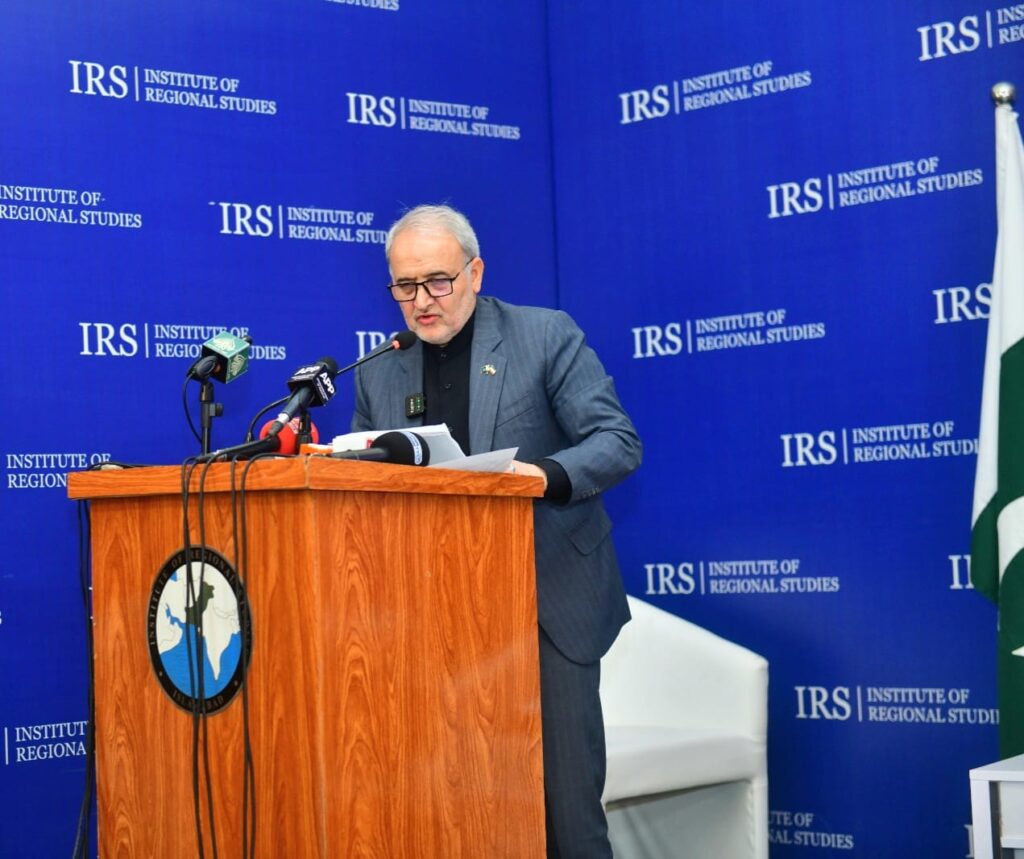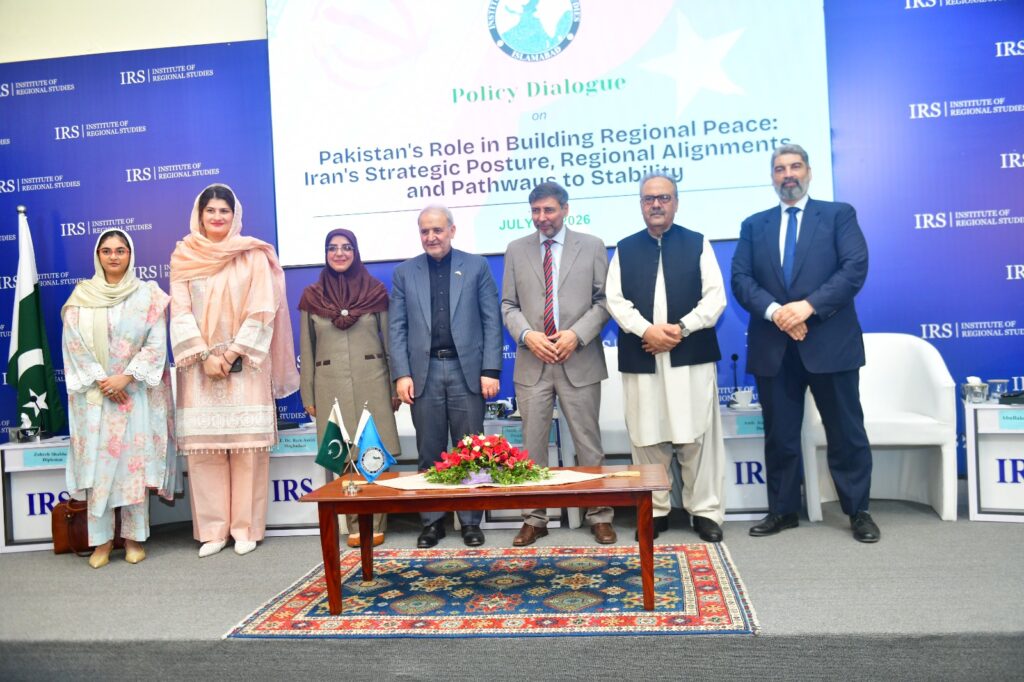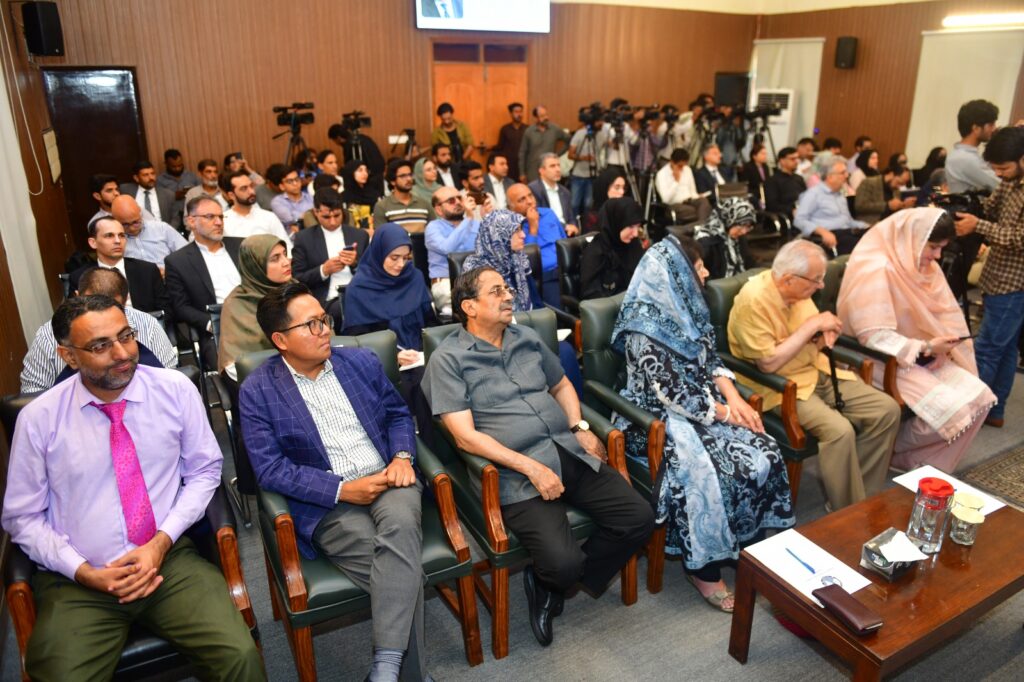
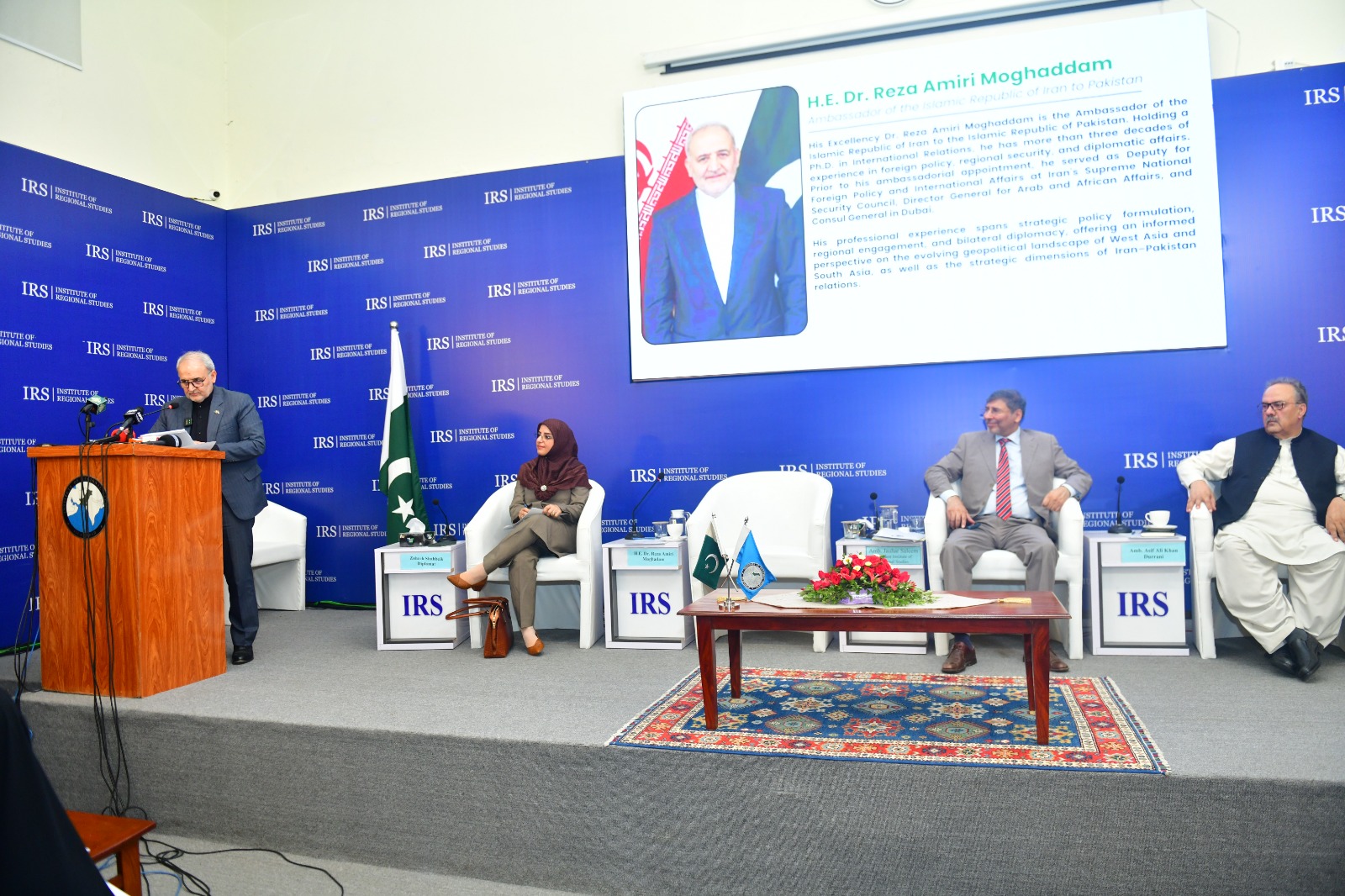
Islamabad: The Institute of Regional Studies (IRS), Islamabad, organized a policy dialogue titled “Pakistan’s Role in Building Regional Peace: Iran’s Strategic Posture, Regional Alignments, and Pathways to Stability” to examine Iran’s strategic posture, evolving regional alignments, the implications of the recent Iran–Israel conflict, and Pakistan’s role in promoting regional peace and stability. The dialogue also paid tribute to Iran’s leadership on the occasion of commemorative ceremonies held across the Islamic Republic of Iran. It provided a timely platform for discussing emerging security challenges in West Asia and exploring pathways for diplomacy, regional cooperation, and conflict prevention.
Delivering the keynote address, His Excellency Dr. Reza Amiri Moghaddam, Ambassador of the Islamic Republic of Iran to Pakistan, outlined Iran’s assessment of the evolving strategic environment in West Asia and expressed appreciation for solidarity shown by the government and people of Pakistan during recent conflict. He identified unified leadership, national cohesion, strategic geography, and an indigenous defence industrial base as the principal pillars of Iran’s deterrence posture. Stressing the significance of regional cooperation, he proposed a closer engagement among Pakistan, Iran, Türkiye, Saudi Arabia, and Egypt to advance peace, stability, and shared prosperity, while reaffirming Iran’s commitment to dialogue and diplomacy.
Ambassador Jauhar Saleem, President IRS, observed that Iran’s strategic posture remains a key factor shaping the security landscape of West Asia. He noted that understanding Iran’s security priorities is essential for assessing regional stability, energy security, and opportunities for diplomacy. Emphasizing the dialogue’s relevance for Pakistan, he highlighted its implications for border security, regional connectivity, energy cooperation, maritime interests, and Pakistan’s broader engagement with West Asia.
Ambassador Asif Ali Khan Durrani, former Ambassador of Pakistan to Iran, described West Asia as standing at a strategic inflection point where broader questions concerning the regional order remain unresolved. He proposed a six-point framework for a cooperative regional security architecture based on sovereignty, non-interference, institutionalized dialogue, collective maritime security, economic integration, and counterterrorism cooperation.
Ms. Zohreh Shahbeik First Counsellor at the Embassy of the Islamic Republic of Iran, appreciated Pakistan’s constructive role in facilitating peace dialogue and bringing stability to the region. She reaffirmed that sustained engagement, mutual respect, and understanding remain the most effective means of addressing shared challenges and strengthening Pakistan-Iran relations.
Addressing the role of the media, Mr. Abu Baker Younis Matar, Bureau Chief, Pakistan Al Mayadeen TV, discussed how regional media shape public perceptions of the conflicts in Gaza, Lebanon, and Iran. He described the Palestinian issue as a central factor underlying regional instability and emphasized the importance of sustained and balanced media coverage.
The policy dialogue concluded with an interactive exchange of views on the prospects for a cooperative security architecture in West Asia. The dialogue reaffirmed the importance of sustained diplomacy, regional cooperation, and inclusive dialogue in reducing tensions and promoting lasting peace, stability, and regional connectivity, while underscoring Pakistan’s constructive role in fostering regional engagement.